


Protect the project before friction becomes expensive
CONSTRUCTION PARTNERING SESSION FACILITATION
Incito facilitates construction partnering sessions that bring owners, engineers, contractors, and trades into alignment early, creating a stronger foundation for how teams communicate, make decisions, and work through challenges as the project evolves.
Book a Discovery Call
Deep experience across construction and infrastructure.
Build the trust, clarity, and shared ways of working that a complex project will depend on for years.


What is construction partnering?
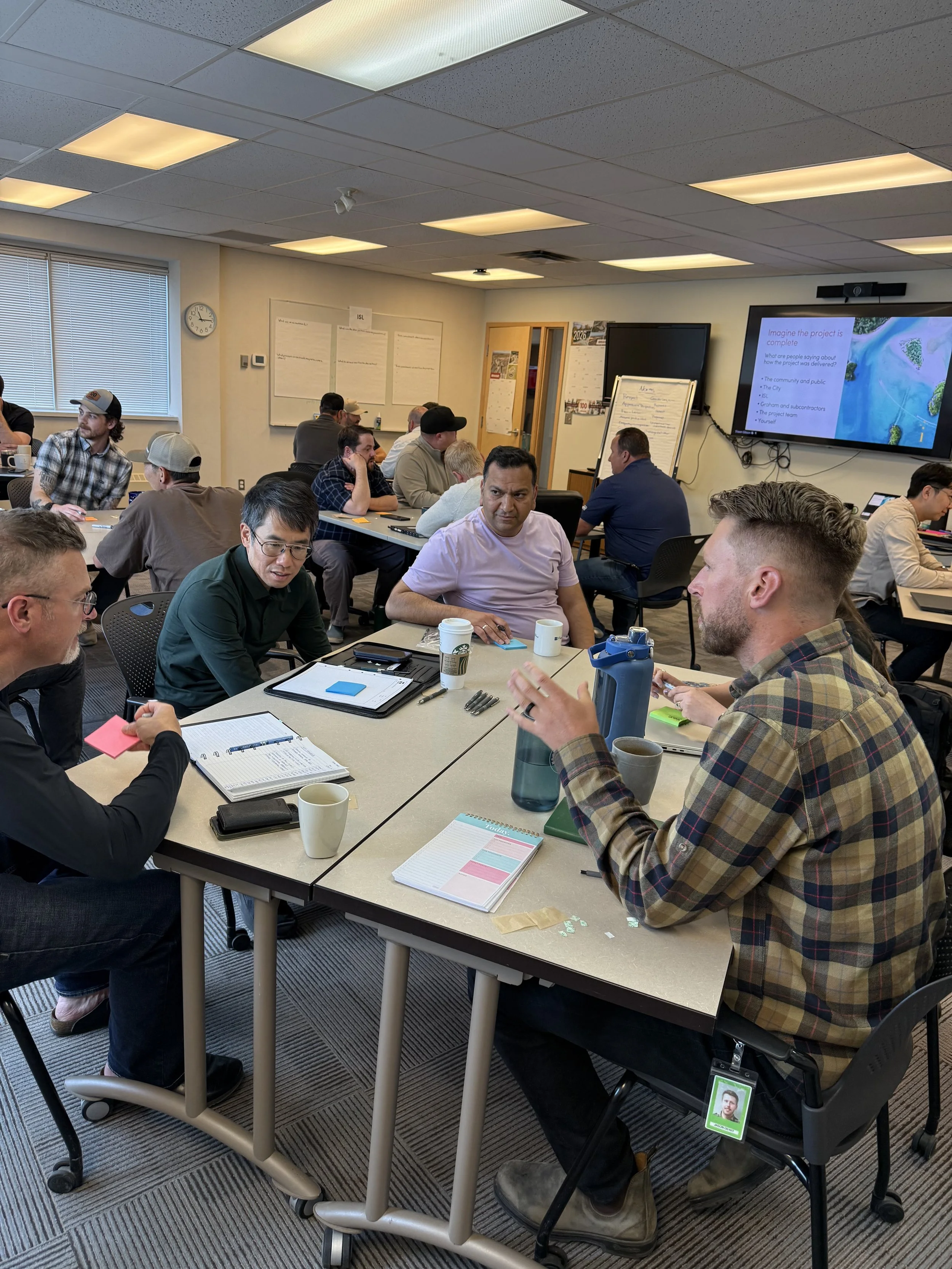
Construction partnering sessions are a structured, facilitated approach to collaborative project delivery. They bring every stakeholder into the room to build one aligned team and a shared Partnering Charter that defines how that team will work together across the life of the project.
Construction partnering can be used across a range of project structures and delivery models, including design-build. The goal is to protect the project from the onset, before friction becomes expensive.
The construction partnering process.
Partnering starts before the project kicks off.
We interview leaders from each organization to understand existing relationships, potential friction points, and project needs.
Then we bring stakeholders together to build a Construction Partnering Charter that defines how they’ll work together and how they’ll make difficult decisions when the contract itself doesn’t provide the answer.
Throughout the process, we surface the conversations that need to happen early, build trust, and establish an approach to resolving issues before pressure hits. And partnering doesn’t end after the Charter is built. Follow-up sessions keep the Charter alive as the project evolves, making it a working agreement that teams continue to use throughout the project.
The benefits of construction partnering
-
Owner, engineers, contractors, and trades working from a shared Charter.
-
Building trust early so the team has established ways of working together across long, high-pressure projects.
-
Fewer claims and less litigation, through creating agreed ways to address issues before they escalate.
-
An agreed escalation process for navigating decisions that require alignment.
-
Less time lost to unresolved issues, misalignment, and avoidable friction.
-
Carried into toolbox meetings, onboarding, and decisions throughout the project, not just filed away.
The partnering facilitator's role.
As a neutral facilitator, Incito creates the space for conversations that can be difficult to have when organizations are working across different priorities, pressures, and responsibilities.
We don’t take sides or tell the team what the answer should be. We help surface what needs to be discussed, bring the expertise already in the room into the conversation, and align stakeholders on shared commitments for how the project team will work together.
“You accelerated six months of team development in one day.”
- City of Calgary
Frequently Asked Questions
-
A facilitated working session that brings the owner, engineers, contractors, and key trades together to build one aligned team and a shared Partnering Charter for how they will work together across the project. It establishes collaboration intentionally from the start rather than leaving it to chance.
-
It starts with interviews with each organization's leaders to understand existing relationships, project pressures, and potential friction points. Stakeholders come together for a facilitated kickoff to build their Partnering Charter and agree on how they will work through issues and escalations. From there, follow-up sessions every four to six months keep the Charter alive as the work evolves.
-
Ideally, at the very beginning of the project, before pressure and conflict set in. Partnering can also help teams reset when challenges have already surfaced, but starting early gives stakeholders a shared foundation before they have to navigate them.
-
Design-build partnering sessions build trust and alignment early, giving stakeholders a shared way to communicate, make decisions, and work through the inevitable challenges of a complex project. This can reduce the risk of claims and litigation, support the project schedule, and help issues get resolved collaboratively before they escalate.
-
For long-term, complex projects, follow-up sessions may happen every four to six months, or more frequently depending on the project. With major builds often spanning three to seven years, recurring sessions help keep the Partnering Charter relevant rather than treating it as a one-time exercise.
-
No. Construction partnering can be used across project delivery models, including design-build. It is especially valuable on complex, multi-stakeholder projects where owners, engineers, contractors, and trades will be working together over a long timeline.
-
One of the biggest challenges is maintaining the commitments made during the initial session as the project evolves and new people join the team. A strong partnering process keeps the Charter active through follow-up sessions, ongoing meetings, and onboarding so it continues to guide how the team works together.
Start your project as one team.
Book a Discovery Call
Tell us about your project, and we’ll help you build the alignment and working relationships needed to keep it moving forward.