

What SHIFT Taught Us About Effective Leadership Development
Inside the 2026 Brandon Hall Group Gold Award-winning leadership program built by ISL and Incito
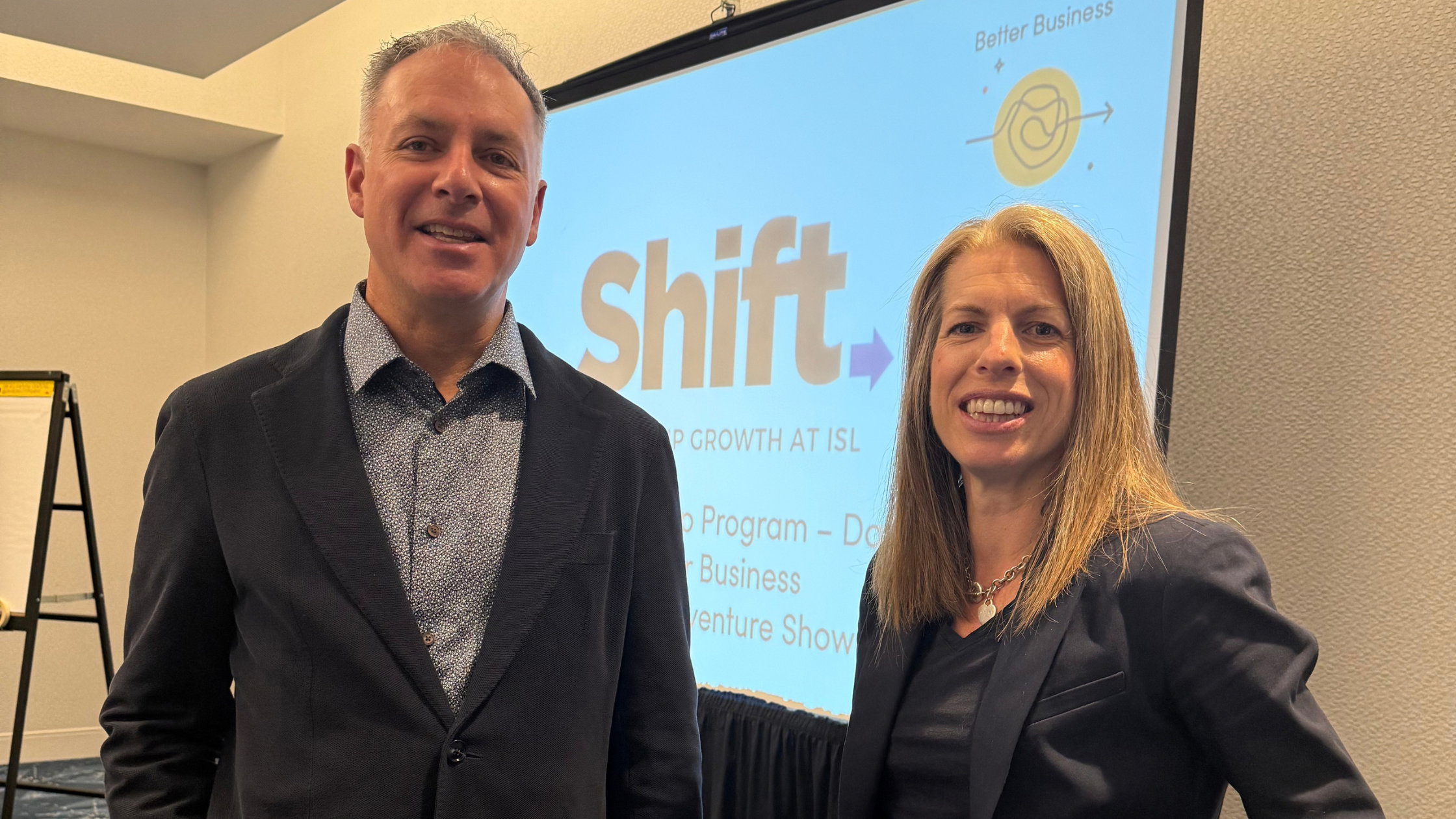
Inside Leadership with Jenn Lofgren and Shawn Gibson
We've believed for a long time that leadership development is measured by what changes when leaders go back to work.
SHIFT gave us compelling evidence of that—and this year, independent validation. SHIFT: Leadership Growth at ISL was recognized with a 2026 Brandon Hall Group Gold HCM Excellence Award for its business value, design, innovation, adoption, and organizational impact.
But what the recognition really gave us was a reason to look back at what made SHIFT work, and where its impact continued to show up outside the program itself.
Co-created with ISL using our better³ approach, SHIFT was built around the real leadership challenges already showing up inside the business. Leaders weren’t learning in isolation from the work. They were applying what they were learning to their teams, relationships, decisions, and day-to-day leadership as the program unfolded. That meant developing the individual leader, the leadership team, and the business together.
Several years and more than 70 leaders later, some of the clearest signs of SHIFT’s impact are showing up in what continued beyond the formal program. This brings us to the question underneath every leadership development investment: So what made the learning stick?
SHIFT gives us a clear example. And looking back, there are a few reasons why.
Lesson #1: Start With the Business, Not the Program
The temptation in leadership development is to start with content: What workshops should we run? What assessment should we use? What competencies do leaders need?
We start with asking questions about the business: What is happening in the business? What will the organization need from its leaders next? What is getting in the way today?
SHIFT wasn't pulled off a shelf. It was built around ISL—its growth, its culture, its leaders and where the business was going. ISL had grown quickly, from roughly 300 employees to more than 600 in a matter of years.
Like many technical organizations, some of its strongest engineers had followed a natural progression: become an excellent engineer, move into project management, and eventually, take responsibility for leading people.
The issue wasn’t a shortage of capable people. ISL had strong technical leaders. The challenge was that the skills that had made them successful as engineers and project managers didn’t automatically prepare them for the human complexity of leading people.
ISL knew that gap existed. They had invested in leadership development before. Leaders had attended university programs, workshops, retreats, and other training experiences. What was missing was a consistent structure for leaders to keep applying what they learned and developing together over time.
SHIFT was designed by both ISL and Incito to create that continuity. Together, it became a year-long leadership experience combining in-person learning, individual coaching, peer sessions, assessment, and repeated application between sessions. Leaders could take something back into the business, see how it held up in a real conversation or decision, work through what happened, and try again.
Lesson #2: Leadership Development Needs Executive Sponsorship
Leadership development becomes much harder to sustain when participants hear one message in the program and experience something different from the leaders and systems around them.
SHIFT wasn't happening off to the side of the business. Senior leaders were part of creating it, reinforcing it and making space for leaders to practice.
That kind of sponsorship is about more than approving a program or showing up at the kickoff. It signals that developing as a leader is part of the job, and gives people permission to spend time reflecting, coaching, trying something differently and learning from what happens next.
That’s an important part of our philosophy at Incito. We don’t see leadership development as a one-time learning experience. The organization has to keep reinforcing the behaviours it wants to see, and senior leaders play an outsized role in whether that happens.
When leaders at the top are visibly part of the work, development is much more likely to become part of how the business operates rather than something people attend and leave behind.
Lesson #3: Leadership Development Has to Live in the Work
Leadership capability isn’t built by exposure to an idea. It’s built through practice.
We work with plenty of leaders who already know what good leadership looks like. They know they should listen before solving, the difficult conversation needs to happen, and that they need to delegate, give feedback, or slow down long enough to bring others into the decision.
Knowing usually isn’t the hard part. Doing it when there’s a deadline, a frustrated client, competing priorities, or a team waiting for an answer is where the learning gets tested.
The real work is helping leaders understand how those tools fit into their everyday leadership and supporting them through the uncomfortable early attempts at applying them. That’s why so much of the development in SHIFT happened between sessions. Leaders had time to take what they were learning back into the business, test it in real situations, reflect on what happened, and come back with something concrete to work through.
Over time, the shift becomes visible in ordinary moments: how quickly they address tension, whether they coach rather than solve, and how they involve other leaders in decisions.
Those ordinary moments have become some of the clearest measures of leadership development.
Lesson #4: Leadership Growth Has to Extend Beyond the Individual
Developing individuals isn't the same as developing leadership capacity.
That’s why SHIFT was built around our “Better Me. Better Us. Better Business.” philosophy:
Better Me: I understand myself and my impact and as a result I know how to lead differently.
Better Us: We build trust, have better conversations and help each other lead differently together.
Better Business: The organization works when there is clarity on direction and everyone is committed to move the business forward.
SHIFT was designed across all three because leadership doesn’t happen at only one level. At ISL, that meant leaders from different offices, disciplines, and levels were developing together.
As cohorts progressed, something important started happening: the language began to travel beyond the program.
Leaders started referencing shared tools and frameworks in meetings. One cohort even brought the “First Team” mindset into ISL’s annual management retreat without being asked. Participants were taking what they learned back to their own teams and using the same language with one another when real challenges surfaced.
That shared language gave leaders a way to recognize patterns, challenge one another, and work through issues without needing the program itself in the room.
That’s when development starts to become bigger than the individual. It starts becoming part of how the organization leads.
What Effective Leadership Development Looks Like at ISL
Several years into SHIFT, the impact is showing up in both the numbers and how leaders are working together.
Today, more than 70 leaders have developed through the program, with five cohorts completed and a sixth planned. Four participants have also gone on to roles on ISL’s executive leadership team.
But some of the most meaningful signs are harder to put on a scorecard.
Leaders are using common tools and frameworks in meetings and applying what they have learned to real business challenges. Perhaps more importantly, ISL has continued investing in the program rather than treating completion as the finish line.
The program continues to evolve alongside the organization, giving leaders ongoing opportunities to keep practicing while carrying a more consistent approach to leadership deeper into the business.
That continued commitment is part of what makes the Brandon Hall Group Gold recognition so meaningful to us. It recognizes the program, but it also reflects the less visible work underneath it: ISL's willingness to commit time, senior leadership attention, coaching, reflection, and repeated practice to developing its leaders over several years.
The cohorts may have an end date, but the development kept going.
Building Better Leaders From the Inside Out
We've long believed effective leadership development requires sustained practice, executive sponsorship, coaching, shared language, real business application and development across the individual, team and organization.
SHIFT put those principles into practice over several years. Brandon Hall Group's Gold recognition provides independent validation of the result.
You can give leaders exceptional frameworks and introduce powerful ideas. But once they return to work, what happens around them matters just as much as what happened in the room. The meetings they walk into, the expectations around them, the leaders they work alongside, and the opportunities they have to apply what they learned all shape whether new behaviours actually take hold.
So, if you’re thinking about leadership development inside your own organization, there’s one question worth asking: When your leaders go back to work, what helps the learning continue?
If the answer is “not much,” the problem probably isn't your leaders. It may be how leadership development has been designed around them.
That's what Incito’s better³ program is intended to change. We work with organizations to build leadership development around their business, their culture and the leaders they need next—not around an off-the-shelf program.
If you're thinking about what leadership development needs to accomplish next in your organization, let's have a conversation.