

The Why That Got You Here Won't Always Take You Further

One of the most common pieces of leadership advice is to "find your why." But the reasons we step into leadership aren’t always the same reasons that continue to drive us years later.
Responsibility changes. The decisions get harder. We experience success, setbacks, transitions, and different seasons in our lives. Somewhere along the way, what once felt like a very clear definition of success can start to feel less complete. That doesn't mean you’ve lost your purpose. More often, you’ve simply outgrown the version that got you here.
And I think that’s an important distinction, because the question isn’t only, “What is my why?” It’s also, “Is the why I’m carrying still strong enough for what I’m being asked to do now?”
Winning Metrics vs. On-Track Metrics
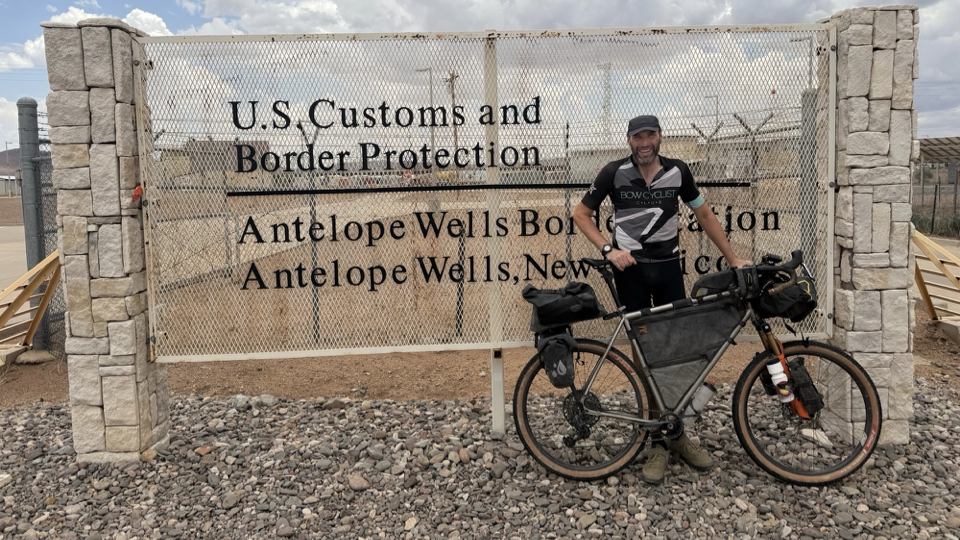
I was reminded of this recently in a conversation with Brian Tuffs, one of the coaches on our team at Incito, after he completed the Tour Divide, one of the world's longest and most demanding bikepacking races. The route runs more than 4,400 kilometres through the Rocky Mountains from Banff to the Mexican border and tests riders physically, mentally, and emotionally for weeks at a time.
Brian had “the why” that got him to the starting line. He wanted the adventure, the challenge, and the chance to finally accomplish something that had been on his mind for nearly two decades.
But as the journey got harder, those reasons stopped being enough to carry him through it.
Reflecting on the experience, Brian shared, "The what was easy. The how was easy. Neither of those things really helped you in the moment." Later, he put it even more clearly: "My initial whys...they were all true. They just weren't deep enough."
Brian's experience highlighted something we often overlook. Purpose doesn't just help us navigate challenges. Challenges also refine our sense of purpose, revealing whether the “why” that got us started is still strong enough for what's ahead.
People step into leadership for all kinds of reasons: growth, achievement, greater influence, or the chance to take on something bigger. But what gets you into the role isn’t always what sustains you once you’re there.
As leadership gets more complex, the challenge changes. Leading through a difficult restructuring requires something different than earning the promotion did. Developing other leaders asks you to think beyond your own capability. Making decisions where there is no obvious right answer forces you to get much clearer on what you’re actually leading from.
As Brian concluded, “Your why has to line up with the challenge in front of you.” I think the same is true in leadership. As the challenge changes, sometimes the reason we’re leading has to deepen with it.
Leadership Has a Way of Changing Us
Brian didn’t arrive at the Tour Divide with a perfectly formed, deeper purpose. The experience itself revealed it.
Leadership often works the same way. In my experience, a lot of what matters most to leaders becomes clearer through the work itself.
A promotion changes how you see responsibility. A setback changes how you think about success. Becoming responsible for other leaders changes your understanding of impact. Personal milestones change what you’re willing to trade away for work.
And over time, a leader who once cared deeply about proving themselves may become much more motivated by developing other people. Someone who was once focused on advancement may become more interested in shaping the culture or building something that will last beyond them.
The problem arises when we keep measuring ourselves against an old definition of success without noticing that it no longer fits. We assume the work has changed, when often it's our relationship to the work that has changed.
Like Brian, leaders don't always discover a deeper why before the journey begins. More often, it's the journey itself that reveals what will carry them through the next chapter.
How Leaders Can Recognize They Have Outgrown an Earlier Why
Recognizing that your purpose has changed rarely happens in a single moment. More often, it's something you notice over time.
You notice that the goals you used to chase don’t create quite the same energy. You’re doing good work, but achievement on its own feels less satisfying. You find yourself more interested in the development of other people, the health of the team, or the broader impact of the organization than you are in your own next step.
When that happens, the goal isn't to immediately look for a new opportunity, but rather to pause long enough to understand what's really changed.
Questions worth asking include:
What first drew me into leadership, and what part of that is still true?
What matters to me now that didn’t matter as much five or ten years ago?
Where am I finding energy that I didn’t expect?
What definition of success am I still carrying because it used to fit?
And what does the challenge in front of me require from me now?
The goal isn't to create a more compelling why. It's to make sure the one you're carrying still reflects the leader you've become.
The Leadership Takeaway
One of the most valuable things a coach can do isn't help a leader create a new purpose. It's helping them recognize when something deeper has changed.
A great coach notices the shifts that leaders often overlook themselves.
A leader might come in talking about whether they should pursue the next role, but the conversation keeps coming back to how much they care about developing their team. Someone else may say they’re frustrated with their work, but what they’re really frustrated by is that they no longer have enough space to influence the things they now care most about.
That's why leadership coaching isn't about giving leaders the answers. It's about creating the space to ask better questions. What has changed? What still gives you energy? What definition of success are you still carrying simply because it once served you well?
Those conversations often reveal that leaders don't need a different career or a different challenge. They need a purpose that's strong enough for the challenge already in front of them.
Let Your Why Grow With You
Finding your why isn’t something you complete early in your career and then put on the shelf. It’s something worth returning to as responsibilities, experiences, and perspective evolve.
The strongest leaders recognize that growth doesn't just change what they're capable of. It can also change what drives them. Revisiting your purpose isn't a sign you've lost your way. It's how you make sure your why continues to match the challenge in front of you.
If you’re at a point where the work still matters but what drives you is starting to shift, coaching can create the space to understand what’s changed and what you want to lead from next.
Explore executive coaching with Incito or book a conversation with our team.